Posts

Showing posts with the label books

"Ministry of Time:" a tepid blast from the past

Image
W here fiction is concerned, I like history, love time-travel and loathe romance. So at two out of three, Kaliane Bradley’s “ The Ministry of Time ” seemed worth a look.  And I guess it was. In a near-future Britain, a pretty young civil servant joins the title agency to help repatriate people scooped from the various eras in the past. Somehow the government  has stumbled on a way to do this, and now wishes to test the effects on both the “expats” and that pesky space-time continuum (which you’ll recall from the “Back to the Future” movies). Since each of the abductees is presumed to have died in their own era, the bureaucrats think there’s little risk to the timeline. Maybe a bit more to the expats themselves. A few develop subtle symptoms, such as becoming slowly invisible to CCTV cameras and biometric sensors. It’s as though something in the timeline is trying to erase the anomaly they represent. The ministry assigns each expat a “bridge” to help them assimilate into modern...

This ship is sinking

Image
I ’ve been looking at this all wrong. All this time I’ve been viewing this Trumpian madness as temporary and fixable. Yes, we have malignant fools steering the ship now, but soon they’ll be undone by their own incompetence and tossed overboard. This can’t go on. Right?  Wrong. This situation looks to be a lot less temporary than I’d hoped. Not long ago we were sailing along with fair winds and a following sea, and then somehow the crazies mutinied and abruptly changed course. Now we’re headed straight into the storm of the century. Also, there are icebergs. The gale-force winds don’t quite drown out the maniacal laughter of the flaccid old Ahab up on the bridge. This will end, as all things do, but it will not end soon, and it will not end well. I just finished Ian McEwan’s latest novel, “ What We Can Know. ” In it, he imagines a historian 100 years hence, surveying this time with a mix of nostalgia and incredulity.  Humanity is still limping along in 2125, in a chastened worl...

In which I respond to reader mail

Image
I t’s been a slow year (not counting the endless carousel of Trumpian atrocities) so maybe it’s time once again to go to the mailbag. Remember mailbags? How they used to bulge? They were fun. Dear Dave : So what have you been reading lately? That is, assuming you are not yet too old to decipher printed material beyond, say, a third-grade level? – Made-Up in Montreal. A: Thank you, although I would point out that we live in a country where a third-grade reading level is considered overkill.  Anyway, I just finished “ Fingersmith ,” by Sarah Waters. It’s set in Victorian England and involves a 17-year-old thief sent to pose as a maid for a 17-year-old heiress. The thief’s mentor, a charming villain known as Gentleman (think Fagin, only better looking), intends to seduce the heiress, marry her, and then ship her off to one of England’s excellent madhouses. He promises the young thief, Sue, a share of the proceeds. Twists ensue – so many that this gentle reader had to stop once in a w...

I'm going to miss these guys

Image
M artin Cruz Smith died last month, but I didn’t really mark his passing until last week. That’s when I finished his last book, “ Hotel Ukraine .” Smith was a great story teller, and his character Arkady Renko is the most memorable of the hundreds of fictional detectives I have known. I’ll miss them both. “Hotel Ukraine” is set immediately before and after Putin’s invasion of the country in 2022. Like nearly all of the 11 Renko novels, this one has him investigating an individual murder amid the vast corruption of the modern Russian state. This time it’s a diplomat, beaten to death in the titular hotel in Kyiv. As we all know by now, when high-profile figures die anywhere near Putin, there’s not a lot of pressure from the top to crack the case. Far from it. If the plot feels sort of familiar, the story is well-told and timely. We get a glimpse of the Bucha massacre and a fascist paramilitary that closely resembles the Wagner group. (You’ll recall that Wagner leader Yevgeny Prigozhin ...

A brief history of hate

Image
The original cast of MAGA W hat happens when a rapacious, hateful and thoroughly corrupt gasbag gains complete control of a government?  Well, we’re finding out, aren’t we? But this is not specifically about Trump. It’s more about this book I just finished: “ A Fever in the Heartland .”  In it, Timothy Egan relates the sordid saga  of a Trump-like figure who managed to take over the state of Indiana in the early 1920s.  At the height of his power as Grand Dragon of the Ku Klux Klan, David C. Stephenson controlled much of the Midwest and believed he had a shot at the White House. If his depravity hadn’t escalated to an actual sex slaying, he might have. Even then it was touch and go. “Fever” is a great example of what Egan does so well: Take well-trod episodes of American history and structure them almost as novels, with villains and heroes and quite a bit of  dramatic tension.  In a lot of fiction, it’s the villain who keeps you turning the pages. You can’t...

That 1870s show

Image
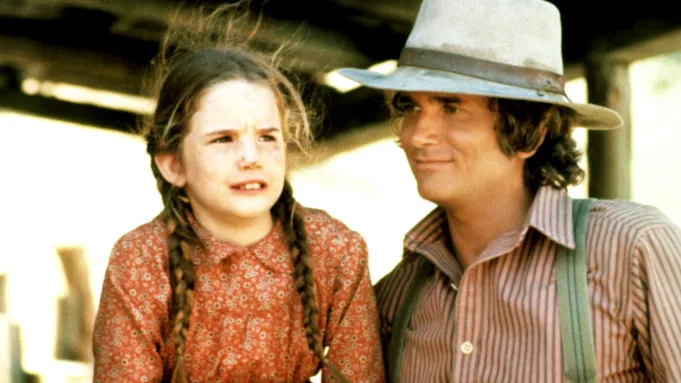
The well-dressed sod-buster   I never read any of Laura Ingalls Wilder’s “Little House” books, nor did I ever make it through any single episode of the hit ’70s TV show. But that doesn’t mean I can’t shit-post about Netflix’s plan to reboot the series.  On the plus side, Netflix has nowhere to go but up. The original was an overlit schmaltz-fest that didn’t tug at the heartstrings so much as percuss them like Django Reinhardt. It wasted no opportunity to impart some simplistic and saccharine lesson. It was supremely inauthentic. For a gritty, realistic portrayal of family life on the frontier, it’s right up there with “The Brady Bunch,” which ended the same year “Little House” started. At least half of the budget appears to have been spent on Michael Landon’s hair and wardrobe. The pioneer life was one of constant toil, but the TV Chuck Ingalls was always freshly shaven and decked out in pressed business-casual shirts with coordinating suspenders. Did he need the suspenders? N...

Move 'em on, head 'em up

Image
W hen’s the last time you read a Western? I used to devour them: Luke Short and Max Brand, mostly. Quite a few Louis L’Amour. Some Zane Grey. The last one I read was probably by Elmore Leonard, who was the best in the genre before he moved on to crime fiction.   I got to thinking about Westerns a few days ago, when Alan LeMay’s 1957 novel “The Unforgiven” showed up as a Kindle Unlimited title. (My new Kindle came with a free trial.)  It’s about a family in 1870s Texas, beset by hostile Kiowa and racist neighbors and quite a bit of bad weather. The Zachary clan raises longhorn cattle by the thousands, which must be gathered and driven to market in Wichita every year. Hell of a way to make a living, since it’s supremely unprofitable and you can’t get good help.   But cattle drives do make a great setting for Westerns. In fact, it’s hard to think of many that don’t feature moving livestock in some way or other. Which now reminds me of Larry McMurtry’s excellent “Lo...

I got some readin' to do

Image
T ake a look at this list of Great American Novels, as propounded by the editors of Atlantic Magazine. Let me know what you think.  Being a sucker for any best-of list, I was naturally curious to see how many of these 136 books I’ve read. I’ve gone through the list twice now and still count only 23! This can’t be right! I guess this is what happens when you read way too many best-selling crime novels. A lot of Really Important books fall by the wayside. About the list: The books had to be published in the United States during the last 100 years, and they had to be recommended by a group of scholars, critics and novelists.  The list came to 136 because The Atlantic thought an arbitrary number would be too, well, arbitrary.  Anyway, if I’m going to take this list seriously, that means I’ll have to find space for, let’s see, 113 Great American Novels that I’ve heretofore overlooked. I’m going to need a bigger nightstand. Not that it matters, but here are the listed books I ...

Let the crap be genuine

Image
For all the young romantics I  once thought I should write a book. So I did. Just one problem: It was a crappy book.  Turns out that’s no longer a dealbreaker. Born too soon!  As of yesterday, an Amazon bestseller list was full of crappy books. And not – as you’d assume – just because the category was “young adult romance.”  No, as this story in Vice reports, the books were all generated by AI. Until Amazon intervened (after complaints from real authors), dozens of books with nonsense titles and nonsense content were crowding the list. Because “young adult romance” is synonymous with “credulous fool,” these fake books were getting a lot of clicks. And clicks, as we know, are the same as cash for the unscrupulous.  In fairness, it’s not just dewy-eyed post-adolescents who are feeling the AI burn. The Washington Post reports how tech journalist Kara Swisher recently found her own memoir being shouted down by a bunch of suspiciously similar books, each with a sligh...

Tough trip through Texas

Image
T here are two kinds of books: Those you want to end, and those you don’t.  “Chenneville” by Paulette Jiles is in the latter category. I expect it will be the standard by which I judge any other book I read this year.  It has everything I love in a historical novel:  irresistible story, crystalline writing, sharply defined peripheral characters, a determined but fallible protagonist.   Like Jiles’ excellent “News of the World” in 2016, “Chenneville” is set in post-Civil War Texas, a land ruled mostly by violence amid the general scarcity of civil authority. John Chenneville is a Union soldier recovering from a severe head wound. He returns home to find his sister and her family have been murdered months before. When he learns the probable identity of the killer, the odyssey is on. He’s going to find this guy, and he’s going to kill him. The quest is complicated by the land and the weather and a relentless U.S. marshal who comes to believe that Chenneville himsel...

Winter nights with Dickens and Dumas

Image
An unpleasant day at the Fagin residence E very year or so I reach back into the mists of time and find a famous classic book I’ve not yet read. There are an embarrassing number of those. So, since December, I’ve finished “A Tale of Two Cities,” “The Count of Monte Cristo,” “Great Expectations,” and just yesterday, “Oliver Twist.”  Three Dickens and one Dumas: Probably enough Victorian literature for a while. But until now I’d read no Dumas books and only two by Dickens (“A Christmas Carol,” of course, and “Hard Times”). I thought the long winter nights might be a good time to catch up.  As most of you already know, Dumas and Dickens tend to write long. Like, really long. Their books seem even longer when read on a Kindle and you can’t judge your progress by the thickness of the remaining pages. You proceed on faith alone, taking one chapter at a time until sleep arrives. And then repeat. The dialog can be surprisingly sharp and witty; Dickens in particular had a keen sense of...

On the road with Charles Frazier

Image
T his is the Fiction Warehouse, so I suppose I should occasionally discuss works of fiction.  Last night I finished Charles Frazier’s latest book, “The Trackers.” I liked it quite a bit. Let’s say four stars out of five. Five is an amount I reserve for works I find profoundly moving or revelatory or funny, to the extent that I keep thinking about them long after turning the last page. “The Trackers” isn’t quite any of those. But it’s a pretty good read, kind of a Western and kind of a noir, both of which were pretty popular during the era in which it’s set: 1937, late in the Great Depression. A young artist is commissioned to do a historical mural in a Colorado post office, part of the Roosevelt administration’s effort to uplift the rural masses. A wealthy rancher and his beautiful young wife take an interest in the artist and offer him a place to live. So: Beautiful young wife and lonely young artist: You know where this is going. But Frazier, to his credit, has a better story in ...

A write on top of the short-story game

Image
I ’ve talked about George Saunders here before. Love his work.  Having just finished his latest collection of short stories, “Liberation Day,” I don’t love it any less.  Like most story collections, many of these have appeared earlier in various places. My favorite of the bunch, “A Mom of Bold Action,” first ran in the New Yorker in August 2021. It’s about a suburban mom (duh) who aspires to be a writer of inspirational children’s books. While she’s daydreaming one corny idea after another, she discovers that her son has wandered off. The son soon returns with a scratch on his face – some transient has pushed him into a bush, for no particular reason. The mom’s thoughts turn quickly from fuzzy optimism to deadly retribution.  It doesn’t sound very funny, but it is. And, like all the stories in this collection, seems drawn from this never-ending age of Trumpism. You know: the corrupted capitalism, the deepening enmity between red and blue, the shameless cruelty toward the ...

"The Passenger" will please refrain

Image
I ’m always conflicted before starting a Cormac McCarthy book. Although he’s one of America’s best writers, his world view tends toward bleakness and nihilism – to an extent that can be off-putting even for a natural-born pessimist like myself. Let’s just say his books have never left me whistling the theme from “Andy Griffith.” Still, most of them are redeemed by the wisdom, wit and elegance of his prose. For a nihilist, he’s damned careful with his words. I tend to highlight a lot of passages in a McCarthy book. Sometimes, as in “No Country For Old Men,” he’s also pretty good at suspense. “The Passenger” is nominally about a salvage diver coming across a sunken plane, apparently undamaged and seven passengers still strapped inside. Some of the plane’s avionics have been removed. Unlike “No Country For Old Men,” there’s no big bag of money – but the diver soon comes to realize that one passenger is missing and someone did not want this plane found. That’s the narrative hook. Good thin...

Writers gone wrong

Image
W hat do you hate most in a book? The Washington Post this week ran a piece on that very subject. It was a timely read for me. I had just finished one novel by a favorite female author and am several pages into another novel by another favorite female author. The first I disliked; the second I’m savoring. First, the books: “The Chimney Sweeper’s Boy,” by Barbara Vine (Ruth Rendell’s nom de plume ), and “Sea of Tranquility,” by Emily St. John Mandel (author of the excellent “Station Eleven”). In his Post essay, book critic Ron Charles posted reader responses to his request for pet peeves in writing. I was gratified to learn that the worst annoyances coincide closely with my own. The mother of all sins, of course, being dream sequences. Hey, I thought that was just me! But Ron’s readers seem united in their disdain for this creaky and frustrating plot device. The Vine book has at least a couple, and I realized it’s hard for me to concentrate when I’m rolling my eyes. None so far in the E...

The cold, hard West

Image
W ho’s the most famous writer you’ve never read? I can think of a few offhand, but now I can cross one off the list: Annie Proulx. A good friend sent me a book of her short stories the other day: “Fine Just the Way it Is.”  I’m about halfway through it. I love that title. I like her style. Yeah, I know. Everyone plus dog has read and raved about Proulx’s Pulitzer-winning “The Shipping News.” That book is 30 years old now; you’d think I might have made time for it at some point. Nope. Mea culpa. But on the strength of the stories I’ve read so far, I did check it out at the library yesterday.  My only previous experience with Annie Proulx was the movie, “Brokeback Mountain.” I didn’t care for it. My wife would say I was put off by the whole gay-cowboy thing, but I think the transition to film may have taken some nuance and authenticity out of the original work. OK, maybe I wasn’t crazy about watching the cowboys (sheepboys?) go at it. I’m always a little squeamish about movie se...

Mad about Harry

Image
I have not read "Spare." Why bother? All the interesting excerpts are already out there. I have read those, for free. Spoiler: Prince Harry once froze his todger. Spending $18 at this point won’t make Harry’s life any better. He’s already pretty well off:  $60 million in the bank and a lot more where that came from.  First with the Netflix series and now with the Spare cash rolling in. (Spare cash, get it?) I do not get why this is the fastest-selling non-fiction title in the history of the universe. When you weigh their joint contributions to humanity – or anything, really, beyond keeping tabloids afloat – the royals aren’t very remarkable. That would include Harry and Meghan. All nice enough in small doses, but surely all laden with the standard array of petty resentments and disagreeable bathroom habits. (Oh, and don’t call me Shirley.) I’ll make an exception for Queen Elizabeth, because of all that history on her side and because she’s dead. But the rest of them are just ...

An audio crush

Image
O ne little-discussed provision of the pandemic relief bill is that all ad copy and commentary must begin with the words “during these uncertain times.” So. During these uncertain times, I’ve been reading a lot of Agatha Christie. I got the idea after my favorite podcast host, Phoebe Judge, decided to read a chapter a day of Christie’s first book, “The Mysterious Affair at Styles.” I’d read most of Christie’s work in my teens and 20s, but I hadn’t read this one. And I’ve been a fan of Phoebe Judge’s “Criminal” podcast for the last few years. Something about an old-fashioned drawing-room mystery delivered in Phoebe’s lovely, measured tones: It’s a comfort. You know, during these uncertain times.  Agatha Christie was at the height of her powers between the end of the Great War and the start of the Cold one. Then her distinctive style — the intricate plots, the clever dialog, the overabundance of red herrings — gave way to a wave of gritty noir populated mainly by mobsters, psychopath...

Trump in spyland

Image
I just finished John Le Carre’s latest: “ Agent Running in the Field .” It’s a pretty good book for those who like literate spy stories, but to me it’s noteworthy for at least one other reason: It’s the first time I’ve explicitly encountered the dark and dimwitted presence of Donald J. Trump in popular fiction. Probably won’t be the last. Trump is not a character, thank God. But he does provide the dark milieu in which he, and his totally excellent compadre Vladimir Putin, continue to amplify the disastrous consequences of Brexit and the 2016 American election.  This is not any kind of political diatribe (although at least one Trumpist reviewer on Goodreads called it that. Because of course). The stoic and deliberate Le Carre has never been a  polemicist. In simpler times he might have been a proud Tory, or a Republican. But he knows quite a bit about the clandestine services. And here he deftly illustrates what happens when chaotic bumblers like Trump (and Boris Johnson) are ...

Fifty-two books and counting

Image
I participate in the Goodreads reading challenge mostly to keep track of the books I read in a calendar year. Why that’s important, I don’t know. At this point in life, I guess, I like to take note of the few challenges I can actually accomplish. Now that I’ve ruled out paddling around the world in a dugout canoe. My goal this year was 52 books: one a week. I achieved that today when I finished “The Furious Hours” by Casey Cep. Last year, my goal was 40 books — and because then I was showing off as a brash contender, a kid out of nowhere, I almost doubled it by finishing 79. This is how I roll: set the bar embarrassingly low, and then boast about clearing it with two feet of air. Lest anyone think I’m an intellectual, the kind of man who reads Nietzsche and Proust for fun, I should point out that my reading leans toward crime fiction, a genre in which the pages turn easier because the stories tend to be plot-driven. Also, they tend to be shorter. Although length can be deceptive. For e...